Driving with Dementia in 2026: Can You Still Drive After a Diagnosis?
As we mark World Alzheimer’s Day 2026, it’s an important opportunity to talk about a question that can cause considerable worry for people living with dementia and their families:
“Can I still drive if I have dementia?”
For many of us, driving means far more than simply getting from A to B. It represents independence, freedom, confidence and staying connected with family, friends and the wider community.
A diagnosis of dementia does not necessarily mean that someone will immediately have to stop driving. However, dementia can affect the skills needed to drive safely, and there are important legal responsibilities to understand.
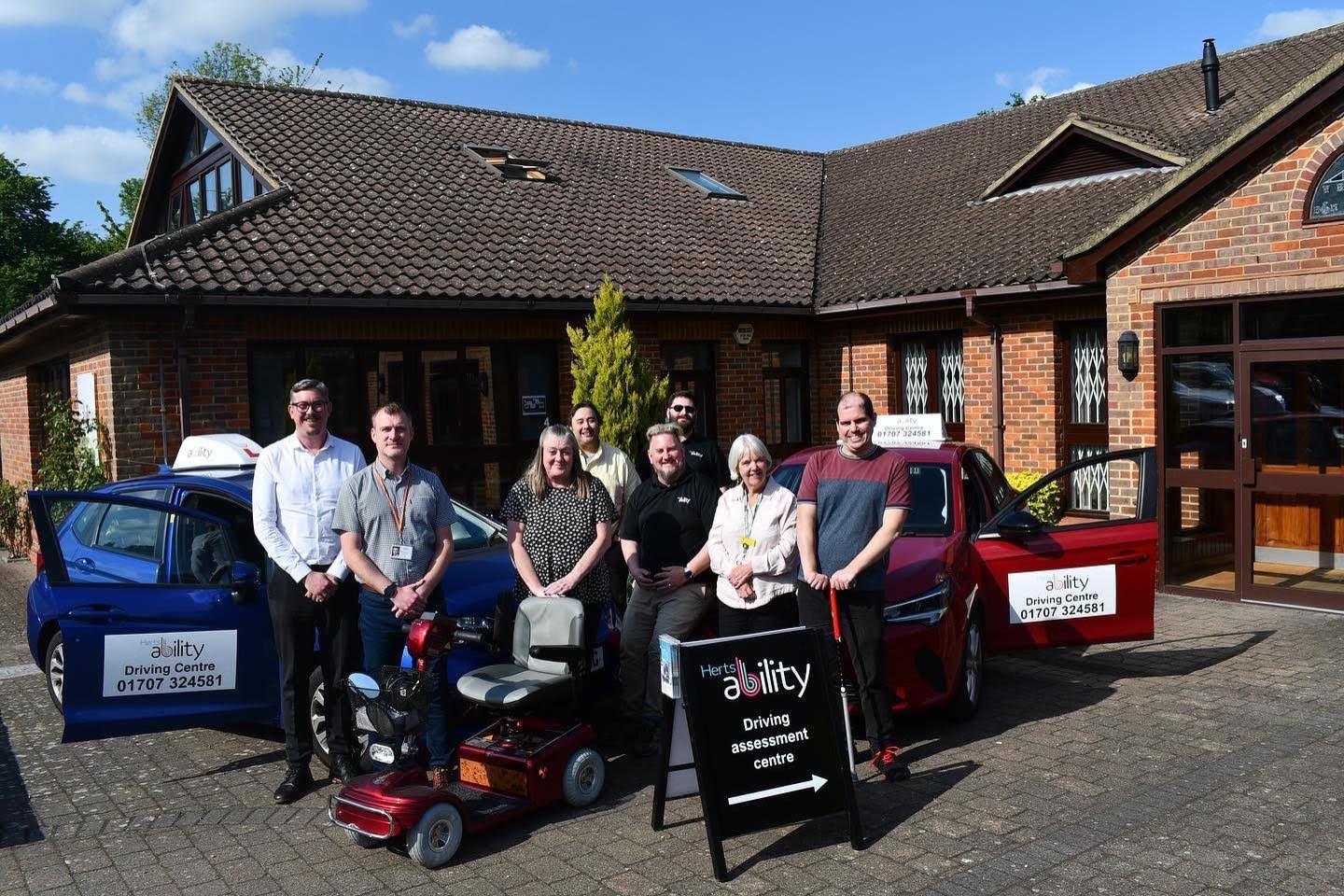
At Herts Ability, our specialist driving assessments are designed to help people understand their driving abilities in a supportive, professional environment - balancing independence with the safety of the driver and everyone else on the road.
Driving with Dementia: What You Need to Know in 2026
Do you have to tell the DVLA if you have dementia?
Yes.
If you have been diagnosed with dementia, you must tell the DVLA.
Current GOV.UK guidance states that drivers must inform the DVLA if they have dementia. This also applies specifically to Alzheimer’s disease. Failure to disclose a medical condition that affects your driving can result in a fine of up to £1,000, and you may be prosecuted if you are involved in an accident as a result.
Telling the DVLA does not automatically mean that you will lose your driving licence. Dementia affects people differently, and DVLA guidance recognises that driving ability can vary according to the individual's symptoms and progression of the condition. Licensing decisions may therefore take medical evidence into account.
This is one of the areas where a specialist driving assessment can be valuable.
What Happens During a Dementia Driving Assessment at Herts Ability?
The purpose of an assessment is not to catch you out or simply look for reasons why you should stop driving.
Instead, our team considers your individual abilities and how they relate to safe driving, while recognising just how important maintaining mobility and independence can be.
At Herts Ability, you can expect:
A supportive environment: We understand that having your driving ability assessed can feel daunting. Our aim is to make the experience as comfortable, respectful and constructive as possible.
Expert assessment: Our assessments bring together specialist knowledge to look at the different abilities involved in safe driving. Depending on the assessment, this can include input from an Occupational Therapist and Specialist Approved Driving Instructor.
Practical driving evaluation: Rather than focusing solely on age or diagnosis, an assessment helps build a clearer picture of how you are actually managing behind the wheel.
A written report: Following the assessment, you will receive a report outlining the findings and recommendations. Where appropriate, this can provide useful evidence when dealing with the DVLA.
Dementia in the UK: The Picture in 2026
Dementia affects an enormous number of individuals and families across the UK.
According to Alzheimer’s Society, around one million people in the UK are currently living with dementia, and that number is projected to reach approximately 1.4 million by 2040.
Those figures make conversations around mobility and independence increasingly important. Driving may be just one part of living well with dementia, but for someone who has driven for decades, the possibility of losing that independence can have a significant practical and emotional impact.
That is why decisions about driving should be based on safety, individual ability and appropriate professional evidence, rather than age or diagnosis alone.
Can Older People Continue Driving After 70?
Dementia is not the only reason someone might begin to question their ability to drive. Many people approaching their 70th birthday wonder whether there are special restrictions on older drivers.
The key point is simple: turning 70 does not mean you have to stop driving.
In Great Britain, drivers must renew their driving licence when they turn 70 and then renew it every three years. The DVLA's online renewal service is free, and drivers can apply when they are 70 or within 90 days of their 70th birthday.
There is currently no general upper age at which someone must automatically stop driving. What matters is whether you continue to meet the necessary medical and eyesight requirements and are able to drive safely.
Older Drivers and Road Safety: Age Doesn't Tell the Whole Story
Our abilities can change as we get older. Eyesight, mobility, reaction times, concentration and confidence may all change - but they do not change in exactly the same way or at the same age for everyone.
Someone may decide they feel more comfortable driving locally rather than taking long motorway journeys. Another driver might avoid driving at night or during particularly busy periods. Others may benefit from vehicle adaptations or specialist advice.
The important question is therefore not simply:
“Am I too old to drive?”
A much more useful question is:
“Am I still able to drive safely and confidently?”
A specialist driving assessment can help answer that question objectively.
How Herts Ability Supports Older Drivers
Our driving assessments can help identify strengths, challenges and potential solutions.
An Occupational Therapist can consider factors such as mobility, cognition and the physical abilities involved in driving, while a Specialist Approved Driving Instructor can assess driving skills in a practical setting.
Where challenges are identified, the answer is not necessarily to stop driving. Advice, changes in driving habits or suitable vehicle adaptations may sometimes help a person continue driving safely.
Following the assessment, you will receive a written report explaining the findings and recommendations.
Valerie's Story
For Valerie, continuing to drive - even with some self-imposed limits - makes a meaningful difference to everyday life:
“I only drive locally and never in the dark, but it’s a big help and keeps me independent. All the Herts Ability staff were really great, always positive and caring and never gloomy or negative.”
Her experience highlights something we see regularly: driving doesn't have to be all or nothing.
Concerned About Dementia and Driving? We're Here to Help
Whether you have recently received a diagnosis of Alzheimer’s disease or another form of dementia, are concerned about changes in your driving, or simply want reassurance about continuing to drive as you get older, you don't have to navigate those questions alone.
A specialist driving assessment at Herts Ability can provide professional, independent guidance and help you better understand your abilities, options and next steps.
For advice or to book a driving assessment with our expert team:
Call: 01707 324 581
Email: driving@hertsability.org.uk
At Herts Ability, we're committed to helping people stay safe, stay mobile and maintain their independence wherever possible.
Information in this article reflects GOV.UK guidance available in September 2026. Individual circumstances vary, so drivers should always follow current DVLA and healthcare professional advice.